If you have ever sat in a South Indian home at seven in the morning and heard the slow drip of a steel filter on the kitchen counter, you already know what we are talking about. South Indian filter coffee is not a drink. It is a ritual. A moment of stillness before the day begins. And in Scarborough, at Sangeetha, it is one of the most ordered things on our menu — not just by South Indians who grew up with it, but by first-timers who discover it and never go back to instant.
Here is what makes it different, how it is made, and why it cannot be rushed.
The Decoction — Where It All Begins
South Indian filter coffee starts with a steel filter device — two chambers, one sitting inside the other. The top chamber holds coarsely ground coffee powder, usually a blend of dark roasted Arabica and Robusta with a small amount of chicory added for depth and body. Hot water is poured over the grounds and left to slowly percolate through into the lower chamber, sometimes for up to twenty minutes.
What comes out is called the decoction — a thick, deeply concentrated coffee liquid that is intensely aromatic and almost syrupy in consistency. This is not your espresso shot. It is something more layered, more patient. The chicory adds a slightly earthy, almost caramel-like undertone that gives South Indian filter coffee its distinctive character.
The Tumbler and Davara — The Ritual Object
Why the brass or steel set matters.
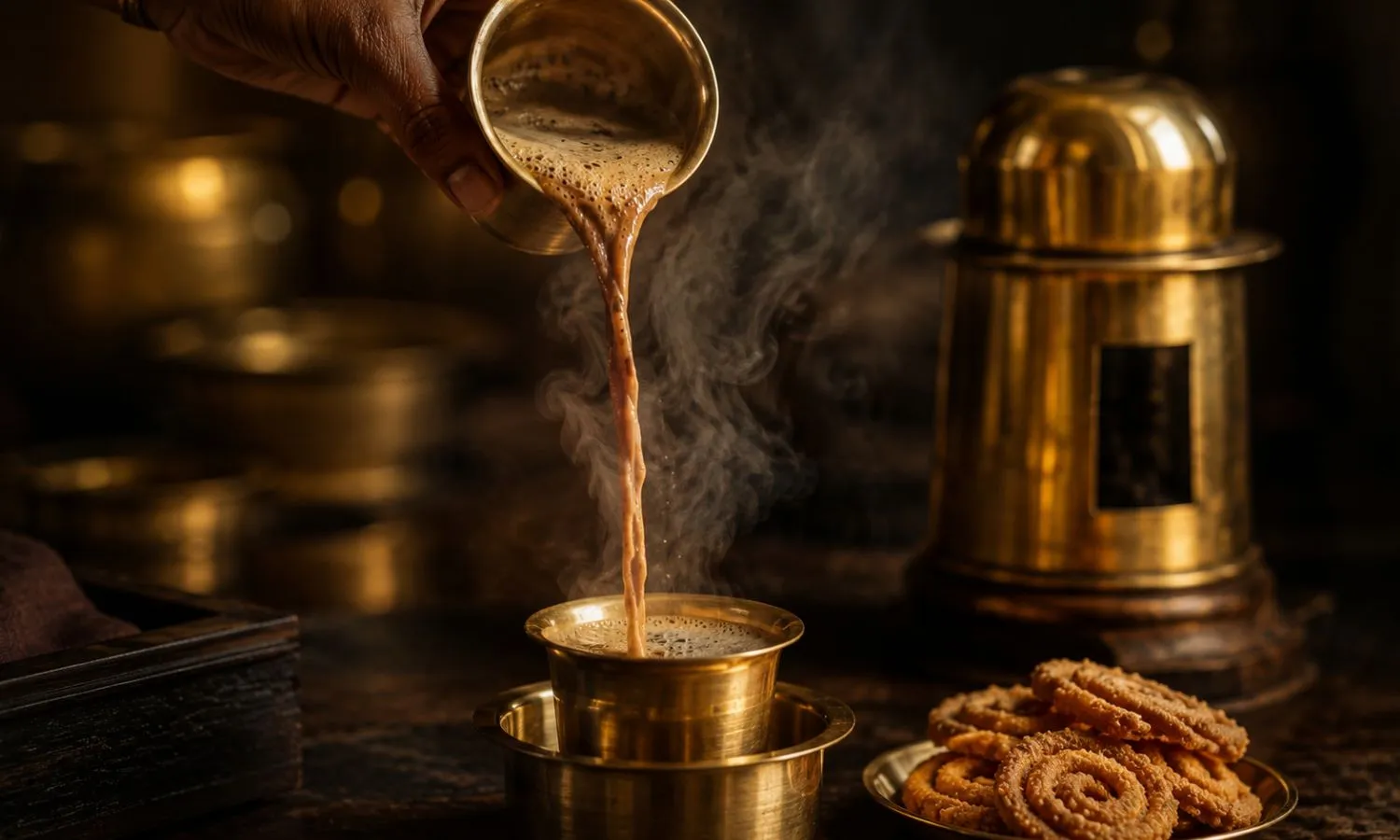
The decoction is then mixed with freshly boiled milk — full-fat, not skimmed — in a specific ratio and poured into a tumbler and davara. The tumbler is a tall steel cup. The davara is a wide, flat-bottomed bowl that the tumbler sits in. The coffee is then poured back and forth between the two vessels, lifted high to aerate it and bring it to the right temperature.
This action — the pour, the lift, the cascade — is called "pulling" the coffee. It creates a light froth on top, cools the coffee to drinking temperature, and is one of the most satisfying things to watch in a South Indian kitchen. The sound of coffee being pulled, the steam rising, the clean smell of roasted grounds and hot milk — it is entirely its own experience.
Traditionally served in brass vessels, steel became the more common material over time for hygiene and durability. But the shape — wide bowl, tall tumbler — has never changed because it works perfectly. The bowl catches the pour, the tumbler holds the drink, and the heat of the metal keeps it warm while you sip.
Why It Cannot Be Replicated With a Machine
This is the question we hear often, especially from customers who appreciate good coffee: why does filter coffee taste different from a French press or a pour-over even when the same beans are used?
The answer is the grind, the ratio, the chicory, and the milk. South Indian filter coffee uses a coarser grind than espresso, which allows the slow percolation to extract a different spectrum of flavour compounds — less bitter, more rounded. The chicory, which is a root, contributes a sweetness and body that coffee beans alone do not produce. And full-fat boiled milk, poured hot, integrates with the decoction in a way that cold or lightly heated milk simply does not.
You can buy the same filter device, the same coffee-chicory blend, and the same steel tumbler online. Many people do. But making it well at home takes practice and patience, which is why coming to a restaurant that does it every single day produces a consistently better cup.
Filter Coffee at Sangeetha
At Sangeetha, filter coffee is prepared the same way every morning. Fresh decoction, full-fat milk, boiled properly, served in the traditional tumbler and davara. We do not use a machine for this. We do not use pre-made concentrate. The decoction is made fresh in batches throughout the day so that what you receive is always at the right strength and temperature.
Many of our customers begin or end every meal with a cup. Some come in specifically for the coffee and a serving of crispy medu vada on the side — one of the great South Indian pairings that, once you have tried it, becomes a weekend habit.
For those visiting a South Indian restaurant in Scarborough for the first time, our filter coffee is the thing we most often recommend finishing with. It settles the meal, it is sweet without being dessert, and it is a small piece of authentic South Indian food culture that you are unlikely to find done this way anywhere else in Toronto.